

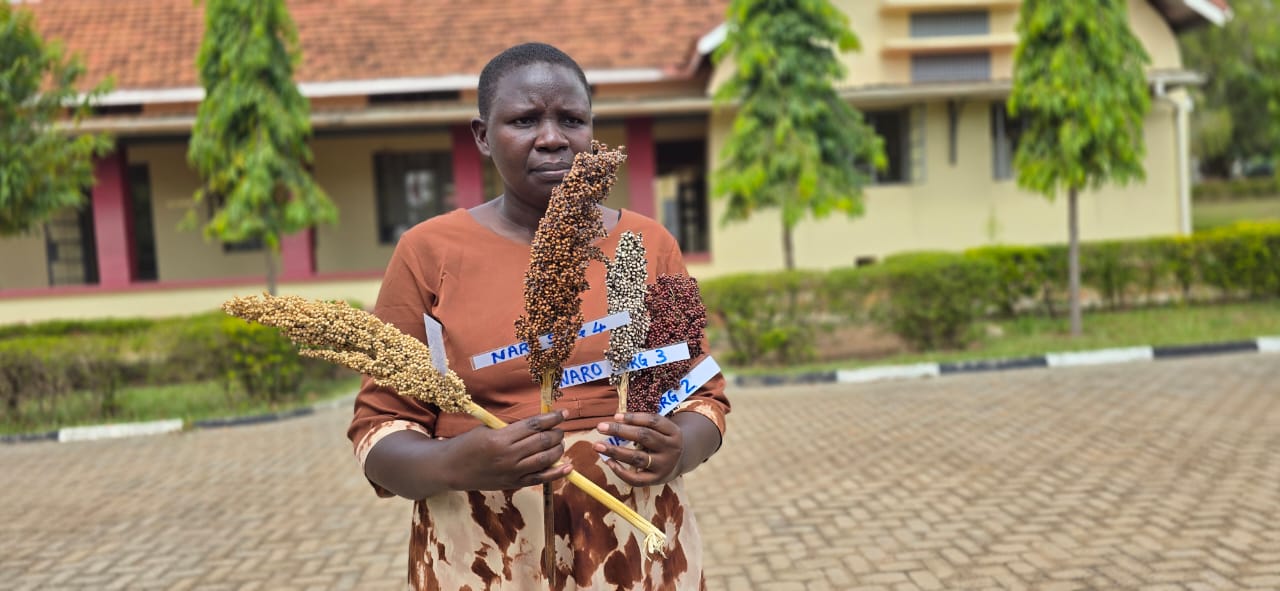
The National Semi-Arid Resources Research Institute (NaSARRI) in Serere has released four new climate-resilient sorghum varieties aimed at addressing food shortages and malnutrition in arid and semi-arid communities across East Africa.
The varieties are part of a sorghum biofortification project under the National Agricultural Research Organisation (NARO), focusing on improving both human and livestock nutrition in drought-prone regions where sorghum is a staple food.
Speaking during a project review meeting, Dr Scovia Adikini, a scientist at NaSARRI, explained that the project targets the nutritional quality of both sorghum grain and stover to benefit communities through improved food and livestock feed.
“Today we are reviewing our project which is biofortification of sorghum to alleviate hunger in East Africa,” Dr Adikini said.
“This project aims at improving the nutritional quality of sorghum, both the grain and the stover, because our target is to improve human nutrition but also livestock nutrition.”
Dr Adikini said the biofortified sorghum varieties have been developed to increase iron and zinc content, two micronutrients often lacking in many households, particularly among women and children.
Iron deficiency, she noted, remains a major cause of anemia, which affects health, learning ability, and productivity in communities relying on sorghum-based meals.
“In the grain we are specifically targeting iron and zinc. Iron is very key for blood regulation in the body,” she explained. “Many of our people are malnourished just because of lack of such micronutrients.”
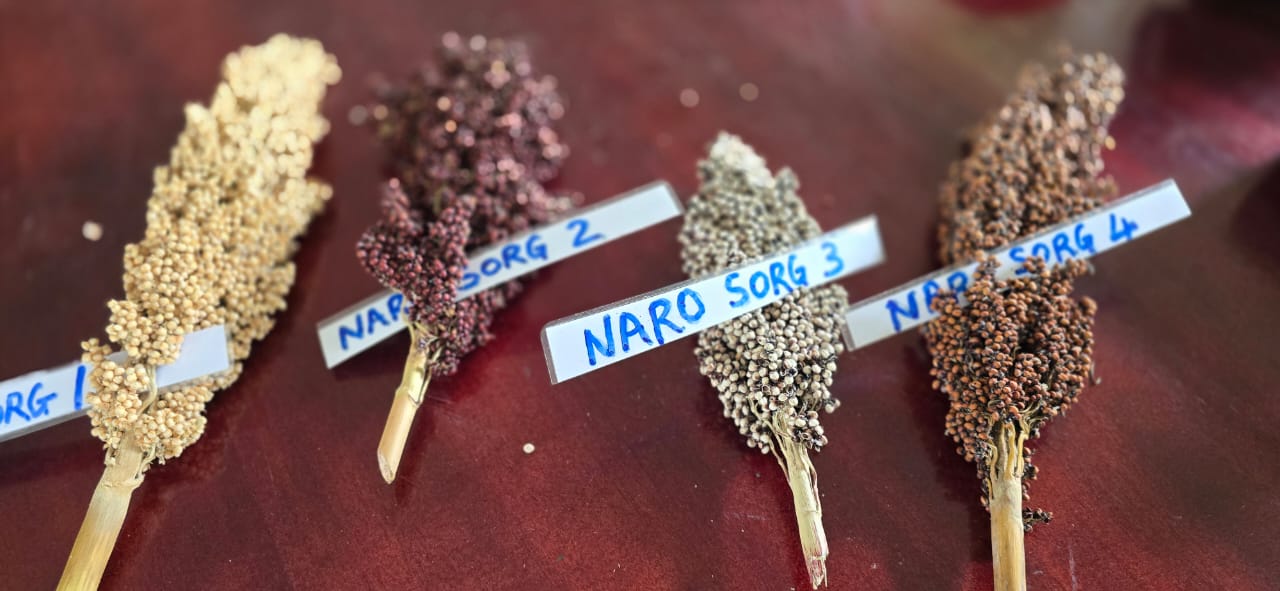
NaSARRI researchers are also addressing livestock safety by reducing hydrogen cyanide levels in sorghum stover, commonly fed to cattle, goats, and sheep.
High levels of hydrogen cyanide in the stover can lead to sudden death in animals, a risk many farmers are unaware of.
“Livestock feed on the stovers of sorghum and if the hydrogen cyanide content is very high it can actually cause death in animals,” she warned.
“These are the silent things sometimes that happen and our farmers are not aware of.”
Extensive Research and Development
The research team has analysed over 500 sorghum lines, including both released and unreleased varieties, to identify those with high iron and zinc, low hydrogen cyanide, and reduced anti-nutritional factors such as phytate and tannins.
“We want to ensure that any sorghum that we take out there must have high iron content in the grain and zinc, but also the stover must have low level of hydrogen cyanide,” Dr Adikini said.
“When we do that, we are sure the health status will improve.”
The newly released varieties are open-pollinated, meaning farmers can recycle seed without purchasing new stock each season. Conventional breeding approaches were used to keep the varieties affordable and accessible to rural communities.
Dr Adikini, however, cautioned farmers to avoid contamination with other sorghum types, which could reduce the purity and performance of the improved varieties.
NaSARRI is also collaborating with partners to develop fortified sorghum products, including sorghum porridge, for both rural and urban consumers.
The National Research Laboratories in Kawanda is supporting product development to ensure communities can access ready-to-use fortified foods once the varieties are widely adopted.
The biofortification project is funded by the Foundation for Food and Agricultural Research, in partnership with CEMIT and NARO, supporting NaSARRI to strengthen sorghum breeding pipelines and deliver improved varieties for dryland farming systems.
Dr Adikini said the work has established a strong foundation for the continuous development and release of climate-resilient sorghum varieties.
With climate change worsening drought and food insecurity across the region, these varieties are expected to strengthen household resilience and improve nutrition outcomes in dryland communities.
